
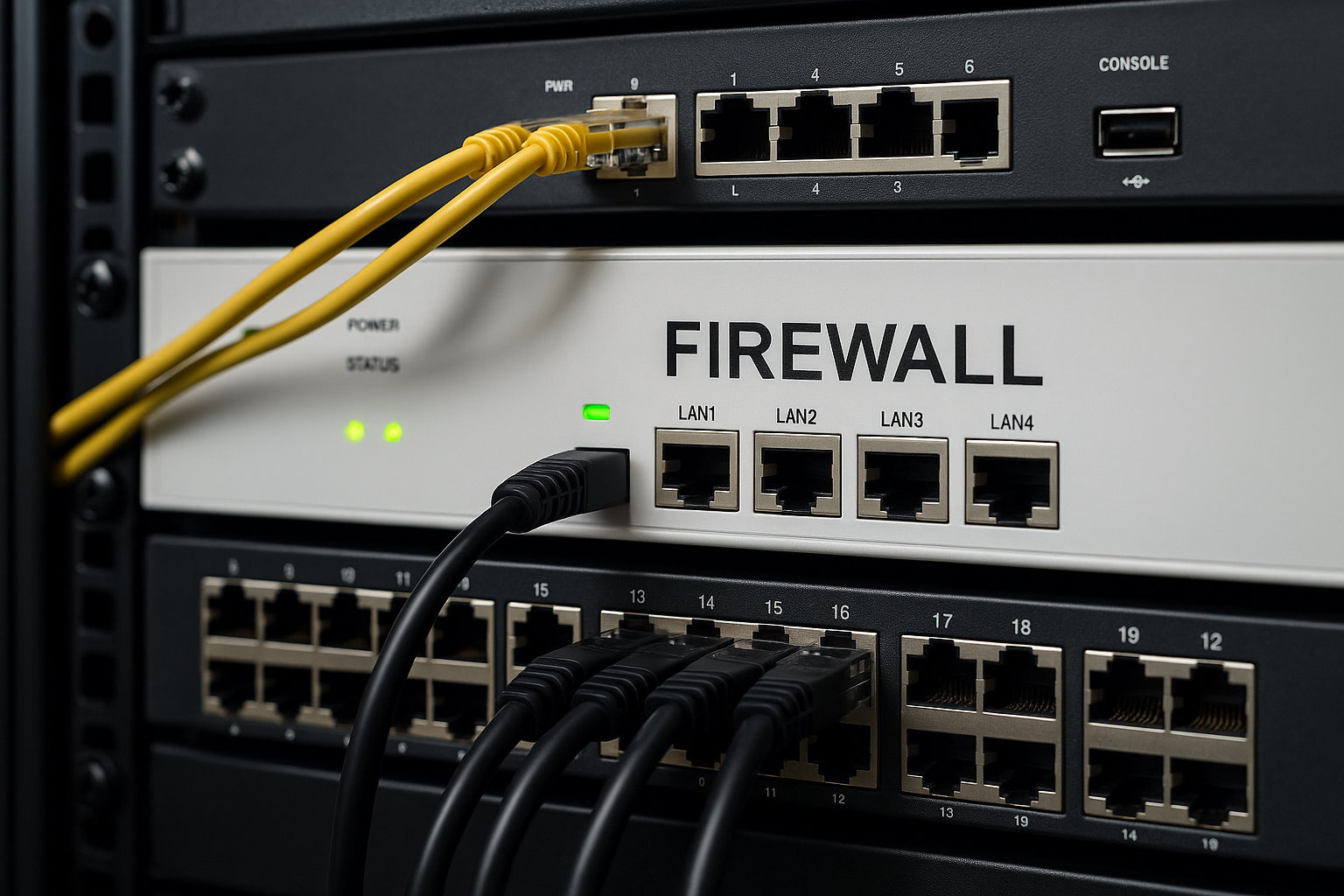
Firewalls are the backbone of enterprise security, but they’re only as strong as their configurations. A single misstep—an overly permissive rule, a forgotten change, or an undocumented update—can expose critical systems to attackers. In fact, firewall misconfigurations remain one of the leading causes of data breaches and compliance failures worldwide.
Too often, organizations rely on the traditional break/fix model to address issues. An error is detected, and teams scramble to repair it after the damage has already been done. This reactive approach not only increases downtime but also drives up costs and leaves dangerous blind spots.
A smarter alternative is a policy-driven, automated change management approach that proactively eliminates risks before they turn into vulnerabilities. Let’s break down the risks of misconfigured firewalls and how to mitigate them effectively.
Why Firewall Misconfigurations Are Still a Top Security Challenge
Firewalls are designed to be the gatekeepers of digital infrastructure, but managing them has become increasingly complex. With cloud migration, remote work, and hybrid networks, rule sets grow longer and harder to manage. Every manual change introduces the potential for error.
Human error and complexity are the perfect storm. Studies show that more than 80% of firewall breaches are tied to misconfigurations rather than flaws in the firewall technology itself. The challenge isn’t the firewall—it’s how it’s managed.
This is why comparing the break/fix model with automated, policy-driven change management is critical. One keeps you in constant firefighting mode, while the other builds long-term resilience.
The Limits of the Break/Fix Model
The break/fix model operates on a simple principle: something breaks, and then you fix it. While this might work for hardware failures, it’s a costly and risky strategy when it comes to cybersecurity.
Reactive instead of proactive: security teams wait until misconfigurations cause downtime, failed audits, or breaches.
Slow and inconsistent: manual fixes vary depending on who’s performing them, creating gaps in policy enforcement.
Compliance headaches: regulators expect consistent documentation and proactive management—something break/fix approaches rarely deliver.
In short, break/fix may solve the immediate problem but creates long-term vulnerabilities.
The Shift to Policy-Driven Change Management
Policy-driven change management turns firewall configuration into a controlled, automated, and auditable process. Instead of relying on rushed manual changes, rules are created, approved, and deployed through automated workflows.
Key advantages include:
- Automation that eliminates human error through predefined policies and templates.
- Consistency across every firewall, site, and environment.
- Real-time monitoring to track changes and compliance status continuously.
- Audit-ready documentation so every update is logged and reviewable.
This approach transforms firewall management from reactive firefighting into a proactive, streamlined security function.
The Top 5 Firewall Misconfiguration Risks (and Mitigations)
1. Excessive Access Rules
Risk: Granting overly broad access permissions creates unnecessary entry points for attackers.
Mitigation: Apply the principle of least privilege, ensuring users and systems only receive the access they absolutely need.
2. Overlapping or Shadowed Rules
Risk: Complex rule sets often result in redundant or hidden rules that cause conflicts and security gaps.
Mitigation: Use automated policy analysis to detect overlapping rules and simplify firewall rule bases.
3. Inconsistent Configurations Across Sites
Risk: Large organizations often manage multiple firewalls across different locations, leading to inconsistent security levels.
Mitigation: Implement centralized policy enforcement to standardize configurations across every firewall.
4. Lack of Change Documentation
Risk: Without proper logs, it’s nearly impossible to track who made a change, why it was made, or whether it complies with regulations.
Mitigation: Rely on automated audit logs that capture every change for compliance and accountability.
5. Manual Errors During Urgent Changes
Risk: Under pressure, teams often push emergency changes that introduce misconfigurations and downtime.
Mitigation: Deploy workflow automation with built-in approvals to ensure changes follow policy, even in urgent scenarios.
Real-World Example: How Automation Prevents Costly Downtime
Consider a financial services firm facing an urgent need to open a firewall port for a new trading application. In a manual break/fix process, a rushed administrator might accidentally expose a broader network segment, creating a security gap. With an automated, policy-driven system, that same request would trigger predefined workflows, apply compliance checks, and log the change automatically. The result is faster execution without sacrificing security or oversight.
Conclusion
Firewall misconfigurations remain one of the most persistent risks in cybersecurity. The traditional break/fix model leaves organizations vulnerable, reactive, and exposed to compliance failures. By shifting to a policy-driven change management approach with automation, real-time monitoring, and audit-ready logs, businesses can dramatically reduce misconfiguration risks while strengthening resilience.
CyberX helps organizations eliminate firewall risks with automation and continuous compliance, ensuring security teams stay ahead of threats instead of chasing them.